
The Power of a Childs "Why": How Voicing Turns Insight into Impact
Apr 23, 2026

Developmental and Behavioural Paediatrician
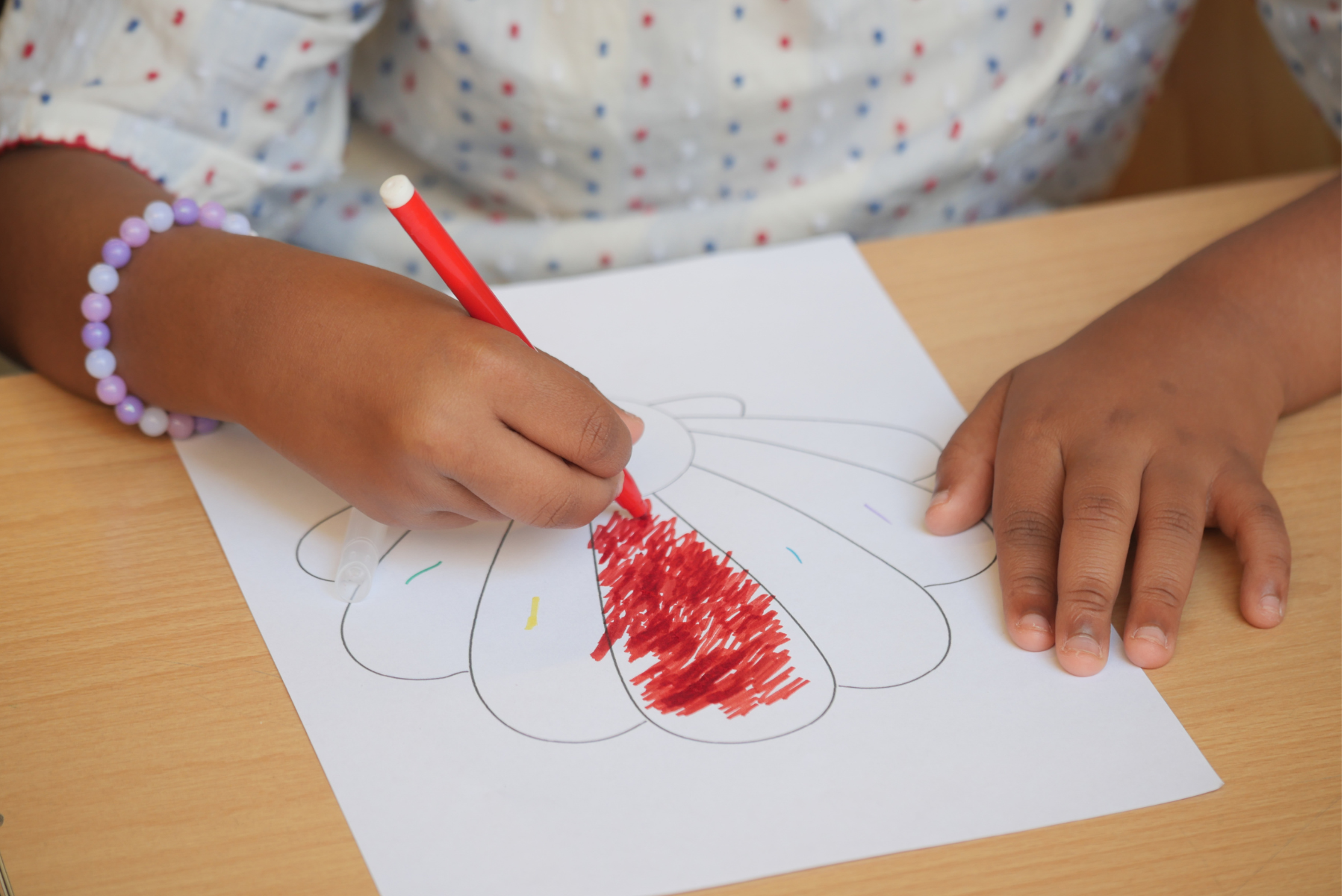
Yashvi is a 9 years old Autistic girl, greatly interested in drawing cat pictures. She is quiet observant and even notices things many people overlook. In the quiet rhythm of her mornings, she wakes up with the sun, usually around 7 am. She walks into the kitchen, puts bread into the toaster, and prepares her own breakfast. Her mother is often asleep at that time. Yashvi tries to get ready by herself and not bother her mother much. During the day, while her mother is working at home, Yashvi walks up to her and asks questions that sound unusually thoughtful for a child her age. “Why do you work so much?”,“Don’t you need any break?”,“Don’t you think we are wasting money by buying so many clothes?” that gives quite an insight into how much she has grown up and how much she cares for her mother. She asks them sincerely as genuine concerns. In her mind, she has connected dots between work, rest, money, and time together and is trying to make sense for them. Sometimes she even tells others not to wake her mother in the morning considering she might be tired. Though there are times when she makes some difficult statements too at home. If her mother tells her that they need to go out, it’s already 6:30 pm. She might look at the clock and remark “It’s 6:27 pm only, why are you lying? You are a liar.” She is a perfectionist and stickler of routine too. If things are not at place at home, she comments “Why is the bottle not in the fridge?” repeating the same question until it’s kept to their location. This behaviour becomes difficult for her mother to manage in daily life.
For a long time, it had just been the two of them. When Yashvi was younger, her father was present. But eventually the relationship between her parents ended seemingly owing to Yashvi’s neurodiversity and the extra support needed to take care of her. Her father’s family gradually distanced themselves until they were no longer part of her daily life. For a child who struggles to understand sudden changes, this absence was confusing and painful. “Where is my dada?” she would keep asking in her early childhood. Once she had gone for vacation at father’s place in Pondicherry for the first time, it got very uncomfortable for the kid, she kept asking “Why my mother isn’t here?”, “Why we can’t be all in Goa home?” Answering such questions became a bit tricky for the family. Them suppressing or ignoring these questions, made her feel more uncomfortable and she started screaming. It became very clear that she can’t live in her father’s home if her mother isn’t around her. Once, in anger and sadness, she asked her mother, “Is it because of me that everybody leaves ?” Those words greatly impacted mother’s heart since she didn’t know how to calm her amidst all the guests at home. In Yashvi’s mind, people and/or guests arriving and leaving created a pattern she could not fully understand. Over time, with patience and reassurance, Yashvi began to process these changes differently. Now, when someone needs to go away, she tries to accept it. “You have to go. It’s okay. Bye,” she says. But the effort it takes her to reach that acceptance is invisible to most people.
Yashvi is a very affectionate child and grows very fond of people around her. In recent years, another adult entered their lives i.e. her mother’s partner. At first, Yashvi called him “uncle,” and later she began calling him “dada”. Their relationship grew slowly through playful moments - laughing together, joking, and spending time as a small family. But this presence came along with some uncertainty. Sometimes he was present, and sometimes he had to travel for work. Each time he left, it stirred a quiet anxiety in Yashvi. Children like Yashvi often need predictability, and changing relationships can feel like emotional earthquakes. When people leave suddenly, she struggles with intense reactions. In earlier years, she would melt down, cry, and try to prevent them from leaving at all. Gradually, with time and reassurance, she learned to cope. Now she sometimes negotiates the separation in her own way; “How much time are you staying at my home? When are you leaving?”, she asks seeing any guest at the doorstep. Though awkward to answer by the guest in that moment, counting how many days someone will be gone and accepting it within that structure. Control, for Yashvi, brings calm. She even grows closer to the class teacher every year. It really becomes difficult for her to go to the next class without that teacher. For her, her class is with her teacher. “Why isn’t she too coming next year? Why is she so bad?” she asks to her mother. At times, preparing her for such a transition helps to later calm down when it happens.
Outside home, to familiar or unfamiliar people, sometimes she asks direct questions. For example, to a neighbour with pizza box in her hands while sharing the lift she asks, “Don’t you think you are fat? Are you exercising everyday? You should not eat pizza and chips. ” To her peers, “Why are you cutting line? We need to stand in queue.” “Why have you not brought the book?” or “Why your notebook is not complete?” and sometimes even informing the teacher about the same. It seems as though they are complaining about her peers but it is just rule following for them which needs to be equal for all. To the teacher when she is late to start the class, she asks her in front of the class “Why are you late?”, if any class is replaced by another class, she demands explanation “Why aren’t we going out in PE class?” and cries until some explanation is provided to her. Many more such questions she tends to ask which seems to create disturbance or discomfort in others but are are an attempt to clear her confusion. To adults in a busy classroom, it may look like defiance. But to Yashvi, they are facts. She does not understand why she should follow instructions that are not explained adequately. When she asks questions and receives only reprimands, the frustration builds inside her. Sometimes that frustration spills out as tears or anger. Sometimes she directs it inward, blaming herself or feeling overwhelmed.
Yashvi has grown to play with neighborhood children, cares for pets, solves puzzles, and spends hours exploring her favorite shows and games. Her life is shaped by many transitions: a father who is no longer present, a mother who works hard all day, a new adult entering and leaving their home, her peers bullying her for her differences and teachers who do not always understand why she asks so
many questions. But through all of it, one thing remains constant. Yashvi is trying to understand the people she loves. She worries about her mother’s exhaustion. She tries to make sense of her father’s absence. She learns, slowly, to trust a new person in her life. And she keeps asking questions when the world feels confusing. She calls out the discrepancy in facts. In her own way, Yashvi is not just growing up. She is learning how to hold together a small, fragile world built around the people who matter most to her through her questions.
A powerful step we can take for curious children like Yashvi is to understand her perspective and truly listen to what she is trying to say, solve her doubts so that she has clarification. This will inturn decrease the meltdowns she would have from getting frustrated in school or at home. We need to understand ourselves too that children like Yashvi often ask questions not to challenge authority or create disturbance in social settings or to be rude, but to understand the world around them. This can be started to practice by the people close to Yashvi, her parents, class teacher or her bench partner whom she expects the most from. T o take a pause, listen to her and reciprocate to her questions. It may be an explanation that can solve her doubt viz. “The students are not out in PE class since PE teacher is on leave and won’t be coming to school”, a fact which we can correct - “Yes you are correct, its not 6:27 pm only, not 6:30 pm. But we need to get ready and go out as planned”, a truth which we need to share her with “Yes I am little overweight but I am exercising in the evening, sometimes I eat pizza which is not good for health. Thank you for pointing out.” Sometimes things might not change and she might need to accept it like the class teacher changing with every year or her father not living with her. At such times, she can be better prepared for the situation preemptively and validated for her feelings so she understands her emotions and does not self doubt herself or blame others. If we can’t do such things in the moment, we can just address her to wait and that we will try to talk to her after the said task is completed.
When we genuinely listen and reciprocate meaningfully to the child by pausing to listen; rather than quickly correcting, dismissing, or silencing—the child feels seen, respected, and safer expressing their thoughts. We give her something extremely valuable: the experience of having her voice matter. For Yashvi, being heard can reduce anxiety, strengthen trust with adults, and help her learn that her questions and feelings are valid parts of understanding the world, where she is trying so hard to belong. When we hear to such questions, we are building a world of thinkers and not just followers. A world where understanding each other matters, things make more sense and inturn less worries and less frustration.
Sometimes Yashvi’s questions may sound repetitive or inconvenient in busy settings like classrooms or daily routines and sometimes socially awkward too. But they often point out to the discrepancies in the world. But in the present era of climate changes, obesity epidemic, sedentary lifestyle, rising crime
rates, war times and so much more happening in the so called neurotypical world, doesn’t the world really need a different perspective for it’s betterment? Don’t we need such a neurodiverse perspective which can inspire others to pause, make us think harder, reset our mindset, really put things in perspective? Don’t we need some cognitive reset in this dystopian world where we want our children to be ‘normal’ when they grow up, but our youth is expected to be really ‘special’ to survive in this competitive world?
Our children’s questions are not interruptions, they are the beginning of a better world. When we truly value their curiosity, we nurture wiser minds, kinder hearts, and a more sensible Earth for tomorrow. So don’t give up on trying, on making the effort, on showing up for our kids, because every moment we listen, guide, and care is a step toward the world they will one day lead. Let’s show them, ours is a world where everyone is nurtured, everyone matters and everyone can thrive.
Pause, not silence, Listen; not hear and Reciprocate; not react !
Over the next three months, I hope to practice this simple rhythm in my work with neurodiverse children: pausing, listening, and truly reciprocating to them. I want to learn from them; how they see their experiences at school and at home, the struggles they face, and the ways they think and make sense of the world. By understanding their voices and viewpoints more deeply, we can offer support that is more thoughtful, meaningful, and respectful- more neurodiversity affirming. Only by listening to them can we begin to truly appreciate the neurodiverse perspective from within their world. This process can help nurture Self-awareness, strengthen Self-determination, and encourage Self-advocacy in our children, inturn empowering them to better understand themselves, express their needs, and participate more confidently in shaping their own experiences.